|
[ CLAMS ]
The cultured Tridacna clams from ORA™ are grown at our clam farm in the Marshall Islands. Space for growing
and availability of broodstock make this location ideal for clam production. ORA™ acquired the farm in late 2003, and has been
improving and upgrading the systems there. In addition, the farm is growing an expanding list of corals native to the area.
There are four species of Tridacna Clams under cultivation at our facility. They are Tridacna maxima,
T. squamosa, T. crocea and T. gigas. Hippopus
hippopus, the Horse-hoof clam, is also cultivated there. ORA™ also sells Tridacna derasa
which are not grown at our Marshall Island farm.
The Clam farm operates with open flow grow-out systems in which fresh seawater is continuously pumped through. They
are under shaded sunlight and are supplied supplemental nutrients for growth, color and health. Some of the most spectacular
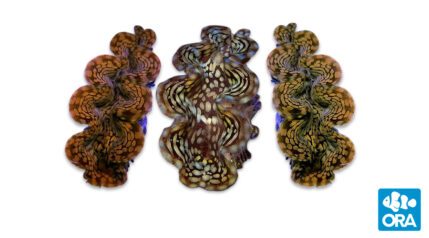
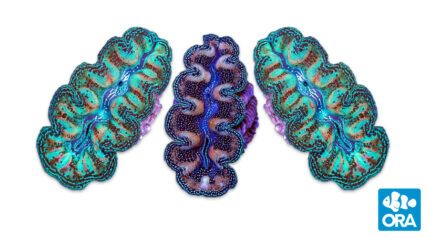
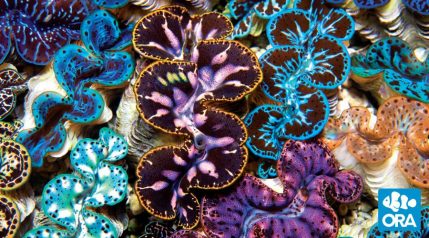
color variations of T. maxima come from the Marshall Islands. We choose our Ultra grade maxima clams for brilliance of
color and unusual patterns. We often have turquoise, electric green and rare Black and White "Zebra" patterned clams
in stock.
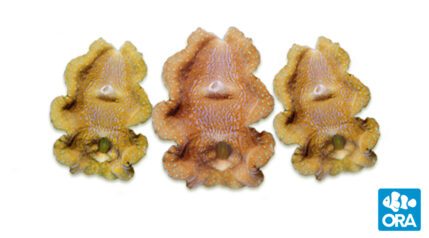
Recently our farm staff succeeded in culturing the real Giant Clam, Tridacna gigas. These true giants are now available as
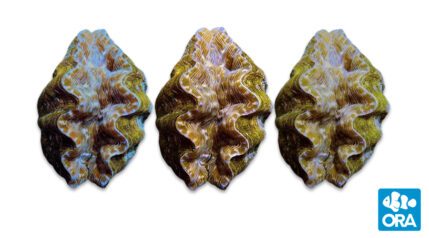
1 1/2 - 2 inch juveniles, which for all clam enthusiasts is a marvel and true treasure. They have a golden brown color as juveniles,
and grow rapidly in aquarium conditions. This very endangered animal now joins the list of available aquarium species thanks to
aquaculture.
Tridacna Clams are relatively easy to care for in aquarium conditions. All of the clams in this genus have symbiotic algae called
zooxanthellae. These algae provide most of the food and nutrients the clams need to live. It is important to provide the necessary
amount of light to keep their symbiotic algae flourishing. Some species, such as T. maxima and T. crocea, prefer to be on rock
surfaces high in the tanks, close to the light. Others, such as T. squamosa and T. derasa, are "sand" clams and prefer to be on
a sand bed on the bottom. Some aquarists supplement feed with commercial phytoplankton cultures. Tridacna clams do filter
feed on this type of plankton, but do not depend on it.
TRIDACNA CLAMS AVAILABLE FROM ORA™
Tridacna maxima - First Grade - Solid purple-blue color
Tridacna maxima - Ultra Grade - Bright green & turquoise color patterns
Tridacna maxima - Gold - Golden brown color with patterns
Tridacna maxima - Zebra - Black and white stripe pattern
T. maxima has the widest distribution of any Tridacnid species. It is found from the Red Sea, throughout the Indo-Pacific region,
to Australia and Polynesia. It usually occurs in shallow, clear water, high current areas where they form high-density
populations. They will attach to the substrate with threads from the byssal organ.
Maxima clams have many different colors and patterns. For this reason they are usually graded for sale in the aquarium
industry. ORA™ sells First and Ultra grades as well as Gold and Black & White mantle colors.
They require high light levels in the aquarium and are best placed high in the tank, close to the lights. They prefer rocky
substrate to attach to. The reflection of colors will change as one views the mantle from different angles.
Tridacna squamosa
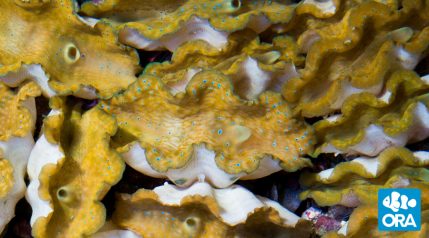
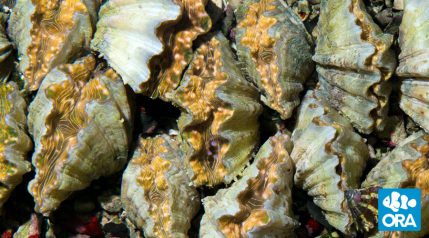
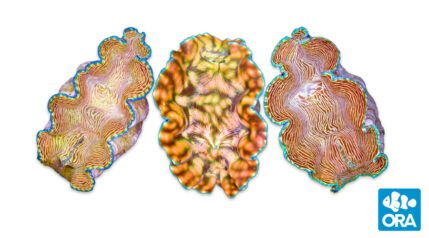
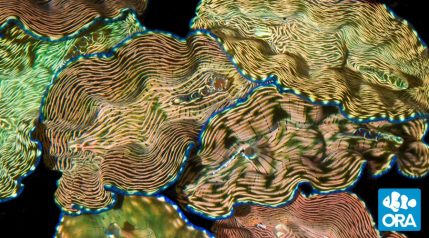
T. squamosa is a medium size Tridacna clam that is exceptionally easy to keep in aquariums. The mantle color pattern is
easily distinguished form other species. It is golden brown with gold and black spots and sometimes has a green or blue border.
Another characteristic are the large scutes or plates on the shell. They are native to the Indo-Pacific coral reefs, and are
found in deeper water of 50-65 feet.
They prefer a sand bottom instead of rocky surfaces, and do not need as much light as T. maxima or T. crocea in the aquarium.
It is an excellent "beginner" clam species.
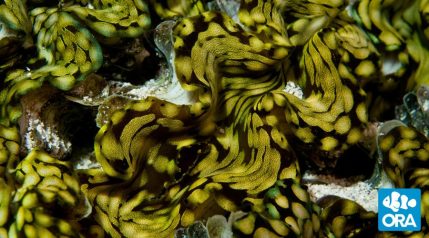
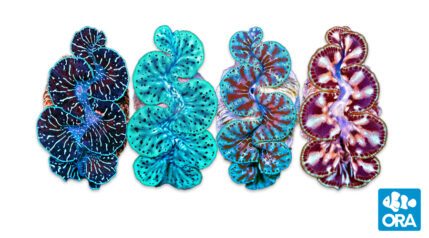
Tridacna crocea - Ultra Grade - Electric green color
Tridacna crocea - Gold - Golden Brown color
T. crocea is the smallest and one of the most colorful of the Tridacnid family. They have brilliant colors with swirls of
blue and green. They prefer a rock substrate where they will attach. Crocea clams need a high level of
light in the aquarium, and prefer a moderate water current.
ORA™ sells two color morphs of T. crocea, the ultra grade and the
gold grade. Both are a colorful and welcome addition to a reef tank.
Tridacna derasa
T. derasa species is known as a "sand" clam. It prefers clear water, and after reaching sexual maturity, it will release the
attaching threads and move to a sandy area.
They are usually colored with orange and black stripes. It is one of the largest
clams, growing to 16 inches in length.
This is a very easy clam to keep in aquariums and should be placed on the sand bottom.
Tridacna gigas
T. gigas is truly the Giant Clam of legend. This species can grow to over 4 feet in length and weigh 440 pounds.
As adults they
live in shallow lagoons and muddy grass flats. As juveniles, T. gigas uses their a byssal organ that secretes
the sticky threads
that will attach it to the substrate.
In time this organ atrophies, and the large size of the animal helps keeps it in place. ORA™ sells
juveniles of this species, which are a golden brown color.
Hippopus hippopus
This is the Horse Hoof Clam, that has a zig-zag opening between the shells. They harbor zooxanthellae, so will live off of the
aquarium light. They are very hardy and easy to keep. Cultured Hippopus often have lime color stripes, which make them distinctive.
|
 |