
|
[ ORA™ EXCLUSIVES ]
In the ocean, genetic mutations or variations are a natural occurrence among all species. However, most mutations disappear
over a couple of generations. At ORA™, our scientists have selectively bred for certain physical attributes that, had they occurred
in the ocean, would have been bred out of the species. This selective breeding has yielded clownfish with fantastic, abstract bars
or no bars at all. These unique and elaborate clownfish are only available from ORA™.
Through a hybridization of two dottyback species, we have created the Indigo Dottyback, a first hybrid dottyback in the
aquaculture industry.
The cross of the Caribbean Neon Goby and the Brazilian Yellowline Goby is an ORA™ first for captive raised marine fish other
than clownfish.
These "designer" fish give hobbyists the ability to have one-of-a-kind fish in their aquariums. By selectively breeding
favorable physical characteristics into popular, aquacultured species, we can create more variety in the marketplace without
depleting natural fish populations. Nature has already provided a template for the unique and beautiful fish you see here.
ORA's ongoing genetic research will yield many more exciting industry firsts. We believe the all-aquacultured aquarium is
the aquarium of the future, and ORA™ is leading the way.
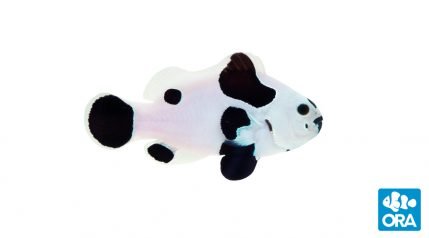
Picasso Percula Clownfish - variation of Amphiprion percula
The Picasso Percula is a selectively bred True Percula Clownfish with erratic misbarring, similar to a jigsaw puzzle piece,
covering over 75% of its body. A very small percentage of offspring of Picasso pairs retain these characteristics. Each fish is
unique with its own distinctive misbarring. Because of the limited occurrence of the misbarring, availability of the Picasso Percula is limited.
Picasso Percula Clownfish are hardy and docile in an aquarium. They will associate with host anemones, particularly carpet anemones.
Naked False Percula Clownfish - variation of Amphiprion ocellaris
The Naked False Percula Clownfish was selectively bred from False Perculas to have little or no barring.
The fish exhibits the
peaceful disposition and behavioral characteristics of other False Percula Clownfish.
The Naked False Percula Clownfish will associate with an anemone.
Stubby False Percula Clownfish - variation of Amphiprion ocellaris
The Stubby False Percula Clownfish lacks the normal number of vertebrae found in the species, resulting in a short, squat body shape.
This variation is selectively bred and extremely rare.
Indigo Dottyback - Pseudochromidae fridmani x Pseudochromidae sankeyi
The Indigo Dottyback is a hybrid of the Orchid Dottyback and the Striped Dottyback. The combination gives this fish its distinctive,
bold blue color with horizontal black stripes. Both parent species are found in the Red Sea.
The Indigo Dottyback has the mild and social nature of the Striped Dottyback and can be kept in groups. A reef tank should have plenty
of rock structure in which the fish can hide. It will dart in and out of live rock during the day and become more visible at feeding time.
Provide a diet of zooplanktonic foods such as brine, mysid or krill shrimp. The maximum size of the Indigo is approximately 3 inches.
Hybrid Cleaner Goby - Elacatimus oceanops x Elacatinus figaro
The hybridization of two goby species represents a breakthrough in the breeding of saltwater aquarium species. This cross of the Caribbean
Neon Goby (E. oceanops) and the Brazilian Yellowline Goby (E. figaro) is a first for ORA™ in the culture of captive raised marine
fish other than clownfish.
The results of this effort have yielded a hybrid goby that combines the blue of the Neon and the yellow of the Yellow-line.
Some are a greenish blue color while others are showing a yellow lined head and a blue lined body. Further breeding efforts at
ORA™ may produce a true breeding color morph of these two species.
|